
Parcel Intelligence for Edmonton Infill Development
Parsla incorporates more than 20 site and zoning data points and 30+ financial parameters for each parcel. Together, these inputs generate over 100 feasibility and financial outputs that help users evaluate development potential and make more informed real estate investment decisions.
ParslaiQ is the scoring engine behind Parsla. It is designed to synthesize site, zoning, and financial analysis into practical decision-making tools before detailed due diligence begins.
Does this pencil?
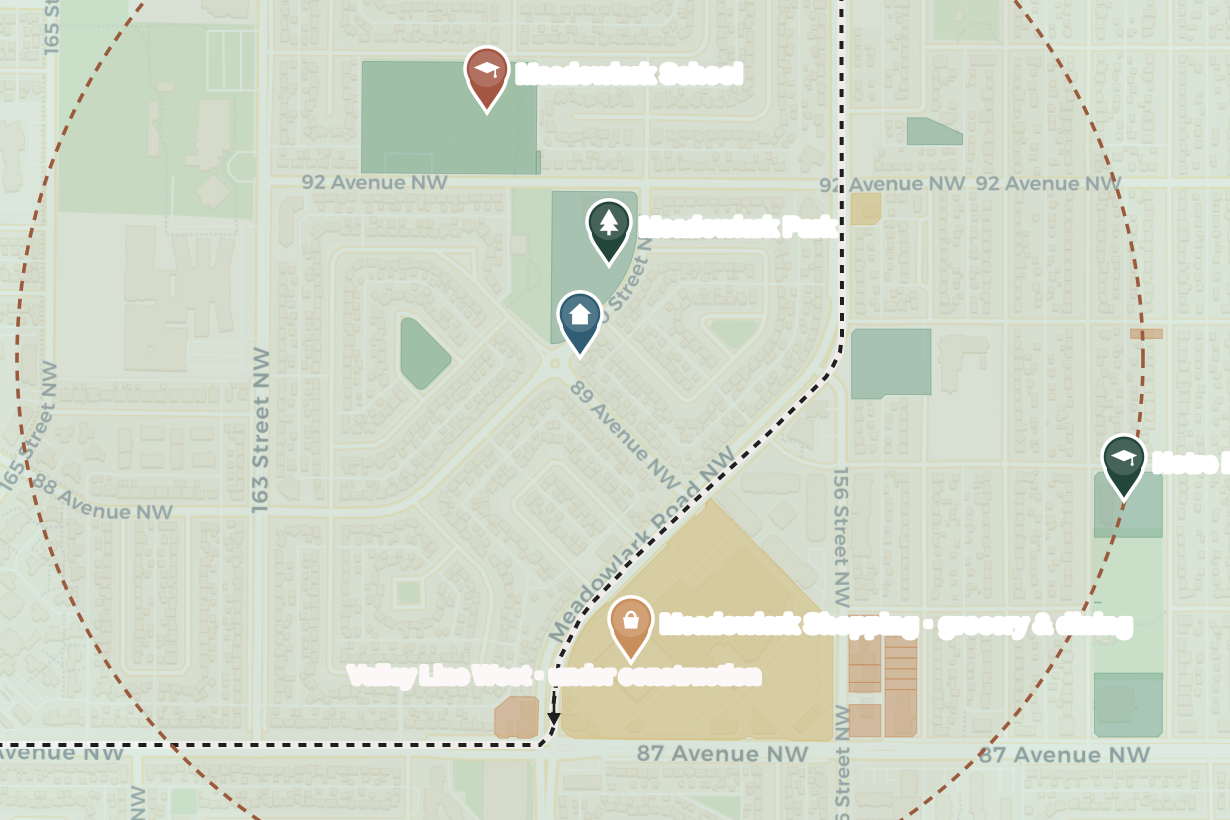
Basemap © Carto / OpenStreetMap. Walk Score® and LRT proximity are screening signals; rent and comps shown here are illustrative sample values.
The ParslaiQ Score
The ParslaiQ score is designed to consolidate the results of the site, zoning, and financial analysis into a single value between 0 and 100. It reflects three key dimensions of residential infill feasibility:
 ™
™Parcel Intelligence Score
Strong Candidate
This parcel demonstrates favourable zoning compatibility and site characteristics suitable for infill development.
This example uses illustrative data. The live ParslaiQ scoring system is currently under development.
Proprietary weighting, normalization, and scoring logic are used in the scoring process. The purpose of the score is to indicate relative feasibility rather than disclose the underlying methodology or replace detailed professional due diligence.
Components of the Score
The same three dimensions, scored 0–100 for this example parcel.
Zoning Permissibility
Review of permitted density, setbacks, height limits, site coverage, parking requirements, and overlay-specific regulations.
This category also considers potential buildable scenarios and the extent to which a parcel can support the proposed development strategy.
Site Opportunity
Lot shape, frontage, lane access, neighbourhood rental and sales comparables, proximity to amenities, walk score, neighbourhood nodes such as grocery stores and parks, and site-specific constraints.
Neighbourhood location analysis and comparable sales and rental data are currently in development.
Financial Viability
The financial pro forma incorporates 30+ financial parameters, including editable inputs and built-in modelling assumptions.
These may include purchase price, construction costs, soft costs, financing, revenue forecasts, vacancy, operating expenses, absorption rates, growth assumptions, and projected investment returns.
Together, these dimensions provide a structured view of a parcel’s relative suitability for infill development.
How ParslaiQ Works
ParslaiQ is designed to synthesize the full property assessment into three scoring pillars and an overall composite score ranging from 0 to 100.
The score is intended to support relative screening, helping investors answer an essential early-stage question:
Does this parcel pencil?
ParslaiQ evaluates the results of the site, zoning, buildable-scenario, and financial analysis. It is designed to identify conditions that may require further review, flag potential approvals or variances, and provide preliminary financial insights before significant time and money are committed to a property.
ParslaiQ supports early investment decisions before architects, planners, consultants, contractors, or other project professionals are engaged for detailed project development.
The Alternative
A property may appear promising while containing zoning restrictions, site constraints, or financial conditions that materially affect its development potential.
ParslaiQ is being developed to bring these factors together in one structured assessment and help users determine whether a parcel deserves further investigation.
Without ParslaiQ
- Hours spent manually reviewing zoning bylaws
- Estimating setbacks from regulatory documents
- Managing spreadsheets with inconsistent assumptions
- Relying on intuition when selecting parcels
- Incurring higher due-diligence costs on non-viable opportunities
- Missing opportunities because screening takes too long
- Difficulty comparing properties consistently
With ParslaiQ
- Automated Edmonton zoning analysis
- Calculated setbacks, site coverage, and buildable conditions
- Standardized financial pro forma analysis across parcels
- Structured comparison of development opportunities
- Data-informed ranking of investment prospects
- Earlier identification of zoning and site constraints
- Focused due diligence on parcels that better align with investment criteria
A Clearer Starting Point
A Clearer Starting Point for Infill Investment
A parcel may appear promising while containing constraints that significantly affect its development feasibility. ParslaiQ is being developed to integrate zoning permissibility, site opportunity, and financial viability into one cohesive real estate investment assessment.
It gives investors, developers, real estate professionals, and project teams an earlier and more consistent understanding of a parcel’s development potential.
Does this deal pencil?
™ ™
™